Merck (MSD) in the United States has secured another favorable ruling in its patent dispute with Halozyme Therapeutics over subcutaneous injection (SC) formulation technology. The U.S. Patent Trial and Appeal Board (PTAB) rejected the patentability of all 30 challenged claims in Halozyme's patent related to modified hyaluronidase technology.
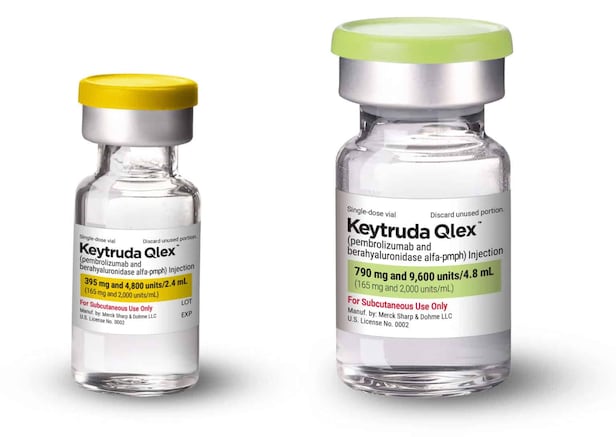
Alteogen(196170) also got a breather. Patent pressure in the United States over the SC formulation of MSD's immunotherapy Keytruda (U.S. brand name "Keytruda Qlex") could ease. The product uses the hyaluronidase technology "ALT-B4," which Alteogen licensed out.
The PTAB under the U.S. Patent and Trademark Office (USPTO) on the 9th (local time) rejected the patentability of all 30 challenged claims in a post-grant review (PGR) that MSD filed against U.S. Patent No. 12,037,618 owned by Halozyme. MSD initially challenged claims 1–40, but after Halozyme disclaimed 10 claims during the proceeding, the final set for decision narrowed to claims 1, 2, 5, and 7–33.
At the center of the ruling was that the scope of the technology Halozyme sought to protect by patent exceeded the experimental data supporting it.
The patent covers technology that alters the amino acid at position 309 of the human hyaluronidase PH20 protein. It broadly claimed variants with at least 91% sequence identity to the native PH20 and also encompassed substitutions, deletions, or insertions at positions other than 309.
But similar amino acid sequences do not guarantee the same enzymatic function. A protein's activity varies with its sequence and structure. The Halozyme specification presented experimental results for single–amino acid–substitution variants, but it lacked sufficient data proving the enzymatic activity of variants with multiple simultaneous substitutions.
The PTAB did not accept MSD's obviousness argument, which asked whether a person could readily conceive the invention from prior art. In other words, the board did not find the invention itself easily derived from existing technology; instead, it rejected the patentability of all challenged claims because the patent's broad assertions were not supported by adequate description and experiments.
The outcome aligns with earlier proceedings. The PTAB previously declined to recognize the patentability of all challenged claims in Halozyme patents focused on amino acid positions 307 and 317 of PH20. Although the position at issue here was 309, the controversy again centered on efforts to claim variants beyond what actual experiments had verified.

As a result, in 12 out of 14 PGRs that MSD filed and the board instituted, the PTAB rejected the patentability of all challenged claims.
The remaining two cases began hearings on Nov. 19 last year. A PGR typically issues a final decision within one year of institution, so results are expected around the 19th. The deadline can be extended.
U.S. decisions do not automatically apply to patent rulings in other countries. In Europe, Halozyme secured a favorable ruling against MSD's Keytruda SC based on a separate patent. Last month, a Dutch court ordered injunctive relief against MSD's manufacture and sale of Keytruda SC in eight European countries.